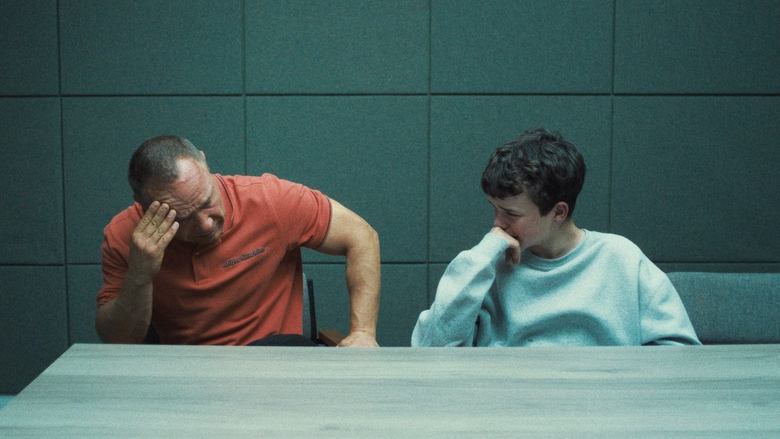
The Numbers That Don't Make Sense
Let us state the obvious: Adolescence should not exist as a data point. A four-episode British crime drama with no pre-existing IP, no franchise potential, no A-list movie stars (Stephen Graham is beloved but not a box-office name), shot in continuous single takes on location in South Yorkshire. This is not the profile of a show that becomes the second most-watched English-language series in Netflix history.
And yet.
The Scoreboard
| Metric | Adolescence | Netflix Limited Series Avg |
|---|---|---|
| IMDb Rating | 8.4 | 7.2 |
| RT Critics | 97% | 72% |
| RT Audience | 74% | 68% |
| Episodes | 4 | 7.3 |
| Total Runtime | ~200 min | ~440 min |
| Views (91 days) | 146.2M | ~35M |
| Emmy Nominations | 13 | 2.1 |
| Emmy Wins | 9 | 0.4 |
The One-Take Gambit
Director Philip Barantini, who previously demonstrated single-take mastery with the film Boiling Point (2021), shot each episode of Adolescence as one continuous take. This is not a Birdman-style "invisible stitch" illusion. Each episode is genuinely one unbroken shot, running approximately 45-55 minutes.
The production math is staggering. Each episode required three weeks of preparation and rehearsal. Filming took place from July to October 2024 across Yorkshire locations, with the police station interiors built at Production Park studios in South Kirkby specifically to accommodate the continuous-take choreography.
Casting director Shaheen Baig auditioned 500 boys for the lead role of Jamie Miller before 13-year-old Owen Cooper, with zero professional acting experience, sent in a demo tape and landed the part. Cooper then had to perform 50-minute continuous takes opposite Stephen Graham, one of Britain's most formidable screen actors.
The Technical Efficiency
| Metric | Value |
|---|---|
| Total Cuts in Series | 0 |
| Episodes | 4 |
| Total Runtime | ~200 minutes |
| Filming Period | July - October 2024 |
| Prep Per Episode | ~3 weeks |
| Views Per Minute of Content | 731,000 |
| Emmy Wins Per Episode | 2.25 |
The Viewership Anomaly
146.2 million views in 91 days. To put that in context:
- Wednesday Season 1: 252M views (the only English-language series above Adolescence on Netflix's all-time chart)
- Stranger Things 4: 140.6M views
- Bridgerton Season 1: 113.3M views
- The Night Agent Season 1: 98.2M views
Adolescence achieved this with no established IP, no franchise, no American cast, and roughly half the content of any series above or below it on the chart. The views-per-minute-of-content ratio is not just the highest for any Netflix original. It is in a category of its own.
The series was not heavily promoted prior to launch. Netflix itself appeared surprised by the response. Word of mouth, driven by the visceral emotional impact of the series and the technical audacity of the continuous-take format, did what marketing budgets typically do.
The Emmy Sweep: 9 from 13
At the 77th Primetime Emmy Awards, Adolescence received 13 nominations and converted 9 into wins. A 69.2% conversion rate. For context, the average limited series nominee converts at roughly 18-22%.
What It Won
| Category | Winner |
|---|---|
| Outstanding Limited Series | Adolescence |
| Outstanding Lead Actor | Stephen Graham |
| Outstanding Supporting Actor | Owen Cooper |
| Outstanding Supporting Actress | Erin Doherty |
| Outstanding Directing | Philip Barantini |
| Outstanding Writing | Jack Thorne & Stephen Graham |
| Outstanding Cinematography | Matthew Lewis |
| Outstanding Casting | Shaheen Baig |
| Outstanding Short Form Series | The Making of Adolescence |
Owen Cooper became one of the youngest Emmy winners in history. The irony: he was cast with no experience, beating actors with decades of credits. The Emmys, which historically reward prestige and pedigree, gave their Supporting Actor trophy to a teenager who had never been on a set before July 2024.
The Post-Emmy Surge
Following its Emmy sweep, Adolescence re-entered the Netflix Top 10 with 3.6 million views in a single week (September 15-21). U.S. viewership spiked 416% comparing Monday September 15 (19.1M minutes) to Monday September 8 (3.7M minutes). A show that had been off the charts for months was suddenly back at No. 5, driven entirely by awards momentum.
This 416% post-Emmy surge is one of the largest in Netflix history for a show that had already completed its initial viral run months earlier.
What the Data Tells Us
Adolescence breaks our models in several important ways:
- Content efficiency: At ~200 minutes total, it delivers more viewership per minute than any series in Netflix history. The industry's obsession with season orders of 8-13 episodes looks increasingly questionable when four episodes can outperform almost everything.
- The one-take premium: The continuous-take format is not just a gimmick. It creates a viewing experience that audiences describe as "impossible to look away from." The format IS the marketing. Viewers recommend the show by describing the format.
- Unknown talent + known talent: The combination of Stephen Graham (known, respected, but not a traditional lead) and Owen Cooper (completely unknown) created a narrative that amplified press coverage. The casting story IS a story.
- British drama, global audience: Adolescence proves that accent and location are not barriers to global viewership when the emotional content is universal. A show set in South Yorkshire police stations reached 146 million viewers worldwide.
- Word of mouth > marketing spend: The series was not a major marketing priority for Netflix pre-launch. Its success was almost entirely organic, driven by viewers telling other viewers to watch.
The Production Context
Stephen Graham, who co-created the show with playwright Jack Thorne, has described Adolescence as his most personal project. The series was executive produced by Brad Pitt's Plan B Entertainment alongside Graham's own Matriarch Productions and Warp Films.
The involvement of Plan B (which has produced 12 Years a Slave, Moonlight, The Big Short, and The Departed) signals Hollywood's recognition of the project's quality pedigree. But the production itself was decidedly un-Hollywood: Yorkshire locations, a UK crew, a first-time lead actor, and a format that most studios would have rejected as too risky.
The Verdict
Adolescence is the most data-efficient piece of television ever produced. Four episodes. Zero cuts. 146 million views. Nine Emmys. Every metric we track suggests this should not have happened, and every metric confirms that it did.
The lesson for the industry is both simple and difficult to replicate: when the creative vision is singular enough, the format innovative enough, and the emotional truth powerful enough, audiences will find the show without being told to watch it. The algorithm did not make Adolescence a hit. People talking to other people did.
Data: TMDB, Netflix Global Top 10, IMDb, Rotten Tomatoes, Emmy Awards database.


